


TherMI
Automated and product-independent detection of streaks and internal inhomoge-neities in injection-molded components based on an inline-applicable, thermo-graphic inspection
Project duration
From: 01.11.2024 To: 31.10.2026Description
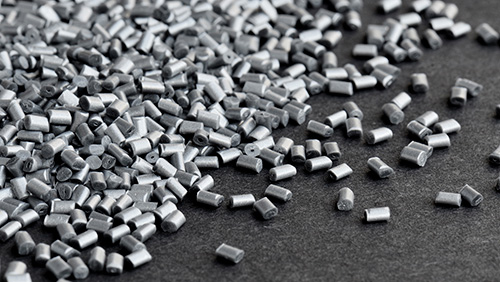
Injection molding is one of the essential processing techniques for plastics and will continue to play a big part for the plastics industry in the future. In the long term, also a digitized and sustainable process design will play an important role. Therefore, the detection of defects in the molded part directly in the process is crucial to be able to make early parameter adjustments and document the quality status. As a result, scrap can be minimized, and the company's image can be improved. Active thermography has already been successfully applied in several industrial sectors and is a promising method due to its non-destructive, direct imaging, and areal application.
This research project focuses on the detection of streaks on the surface and inhomogeneities in the inside of a molded part that can negatively affect the component properties. Two approaches will be investigated and, if successful, further developed into measurement methods suitable for industrial use. Therefore, the components are heated from specific illumination angles with optical radiation or infrared radiation. Differences in absorption, emission or reflection behavior can be used to detect defects on the surface, while internal inhomogeneities particularly affect the thermal diffusivity and thus lead to measurable temperature differences on the surface. After the development of a user-friendly evaluation software, the measurement technology will also be tested inline under industry-related conditions, and the environmental influences are identified and taken into account in the evaluation method.
Contact person: