




Composites
Composites
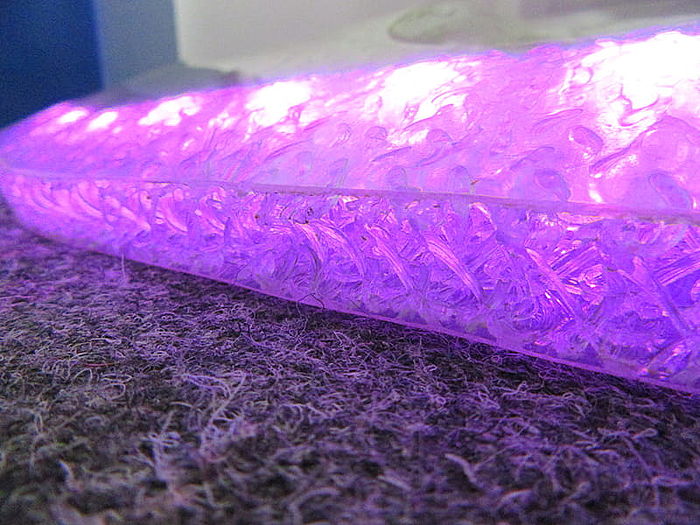
Composites are composite materials—that is, a combination of two materials, usually with a carrier matrix as the base. Reinforcing fibers are added to give the composite greater strength and increased rigidity. In most cases, a plastic (thermoplastic or thermoset) serves as the matrix, and glass, carbon, or natural fibers, for example, serve as the reinforcing material for composites. Fiber-reinforced plastics have high stiffness and strength while being lightweight. Composites are therefore ideal materials for lightweight construction applications.
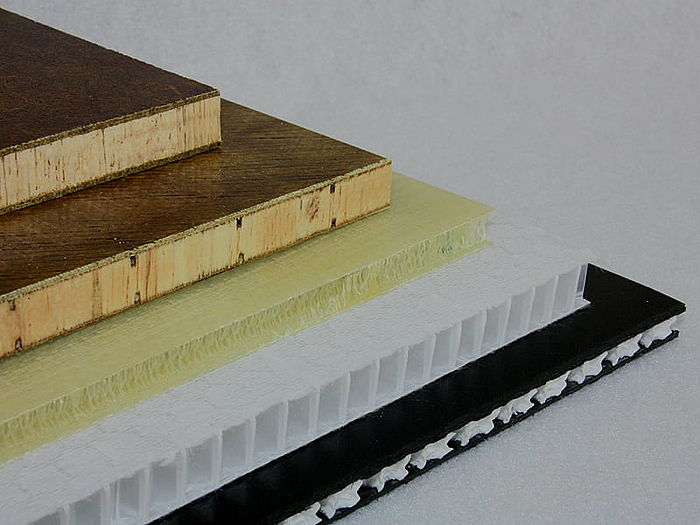
Typical examples are GRP (glass fiber reinforced plastic) or CFRP (carbon fiber reinforced plastic). Sandwich structures with cover layers and a lightweight core (foam or honeycomb structure) are also considered composites. The advantages of composites are their high strength and low weight, the possibility of functional integration, and the protection of the fibers from corrosion by the plastic matrix.
Composites are very important in boat building, wind turbines, sports equipment, and the automotive sector, for example. In addition to their use in mechanical engineering and vehicle construction, their special properties also enable them to replace traditional materials in the construction industry.
One focus of our research work is the development of innovative resin systems for fiber reinforced plastics (FRP). These include thermally latent epoxy resins for prepreg applications, self-healing resin formulations, and flame-retardant coatings for FRP.
We are your point of contact for publicly funded projects and direct collaborations.
Get in touch with us!

Services
State-of-the-art equipment for best results and products
In unseren modern ausgestatteten Laboren forschen wir an den Werkstoffen von Morgen. Dabei arbeiten wir eng mit der Industrie zusammen, um zahlreiche gute Produkte noch besser und v. a. nachhalitger zu machen. Fordern Sie uns heraus. Gemeinsam finden wir auch für Ihr Problem eine Lösung.