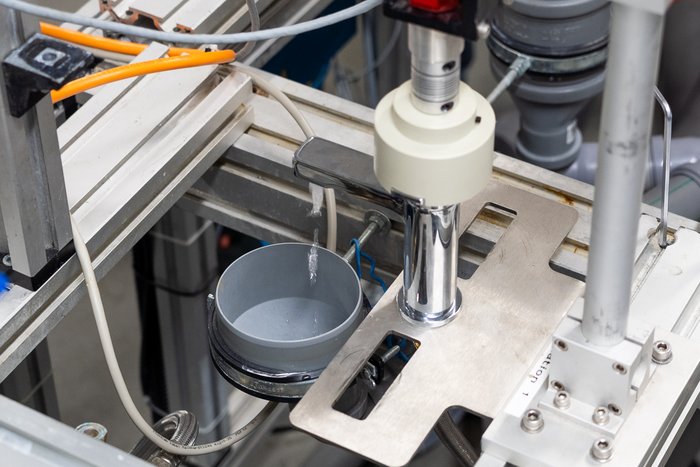
Search standard for testing available at SKZ

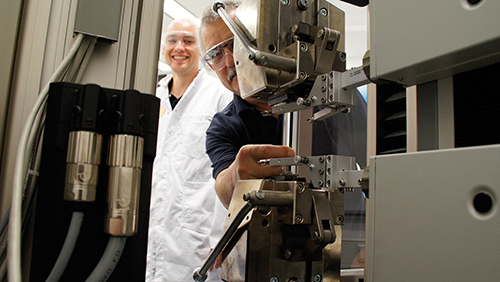

Testing of sanitary tapware
Your Path to Certification
Testing of sanitary tapware
Your Path to Certification
Sanitary tapware play a crucial role in water and building installations. They are components in plumbing and piping technology that are used for shutting off and controlling. Their most important task is to close the pipe so that the medium (e.g. water or gas) can no longer flow. Sanitary tapware include taps, but also thermostats, valves and gate valves. Depending on the specific function and application, the corresponding fittings are installed in water and building installations.
Taps are typically available as thermostatic valves or in the form of mixer taps. Faucets are generally used in sanitary installations.
As a transport medium for drinking water, sanitary tapware must meet special requirements, both in terms of mechanical and hydraulic properties. The hygienic properties are also checked. The hygienic requirements are aimed at checking whether the water is contaminated by the migration of materials.
Do you need a fitting certificate
for DVGW, WRAS, or WELL certification?
We’ll support you every step of the way!
Your Path to Certification: The Example of DVGW Certification
1. Your company submits an application to the DVGW. (We will be happy to assist you with this!)
2. The DVGW reviews your application and registers SKZ as the testing laboratory.
3. We’ll prepare a quote for you.
4. You commission us to test your product.
5. We forward the test results to the DVGW.
6. The DVGW issues you the certificate.



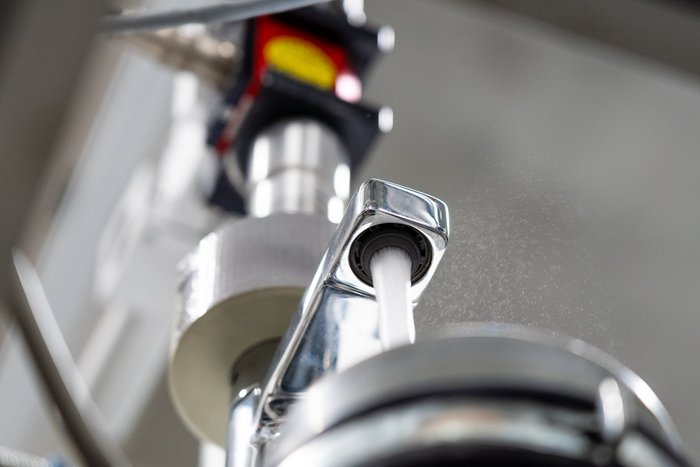
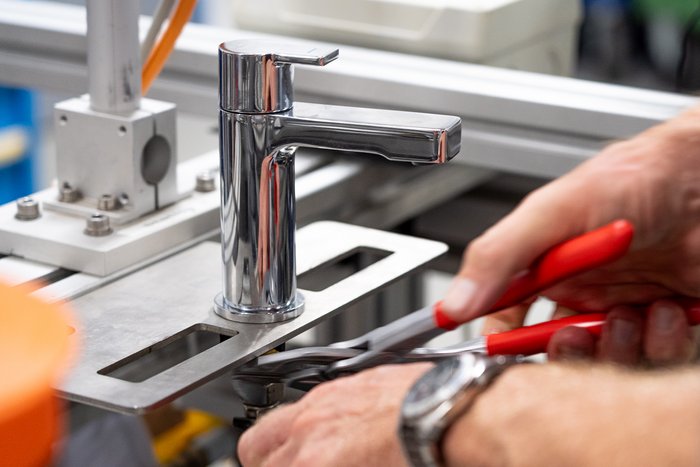
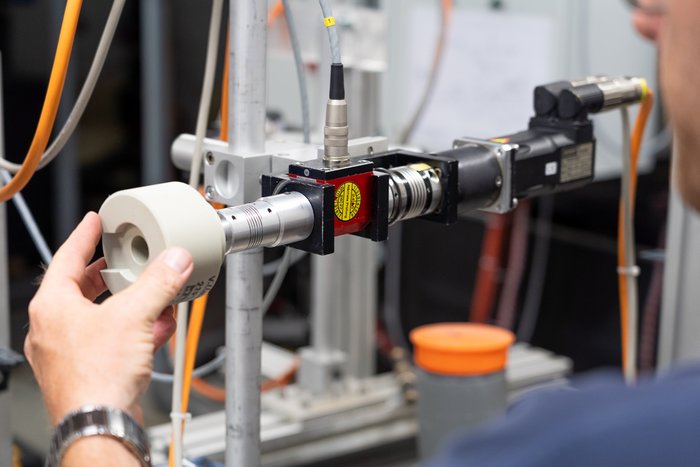
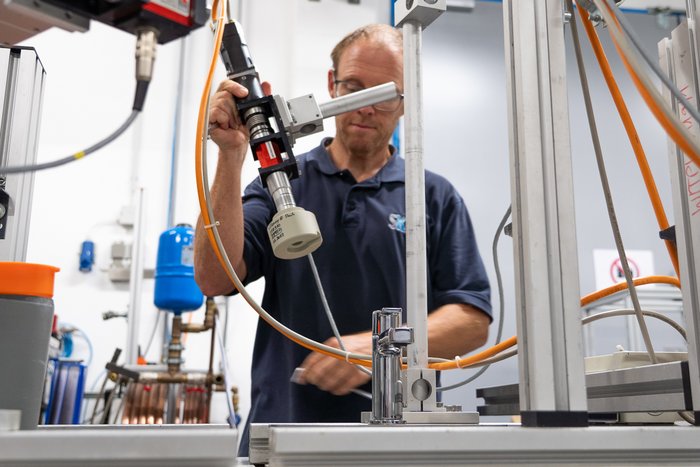
We test sanitary tapware in the following areas
- Hydraulic and mechanical tests
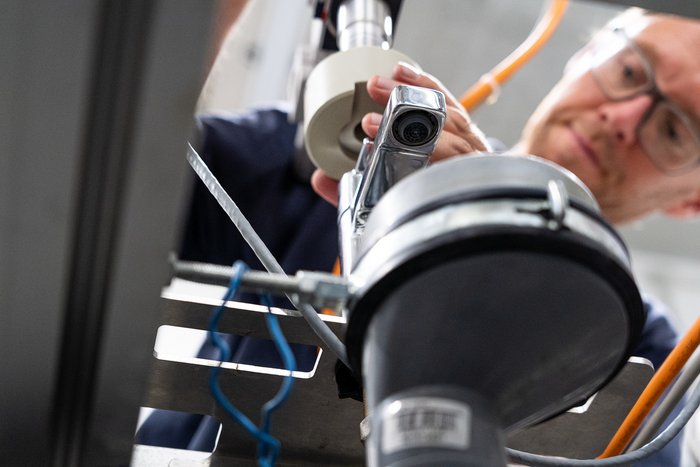
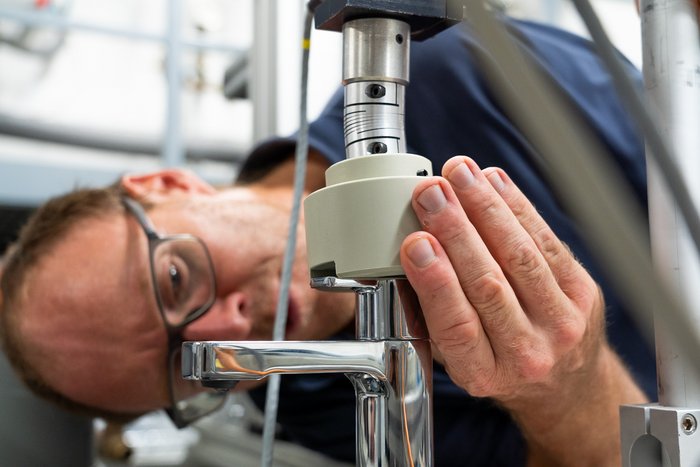
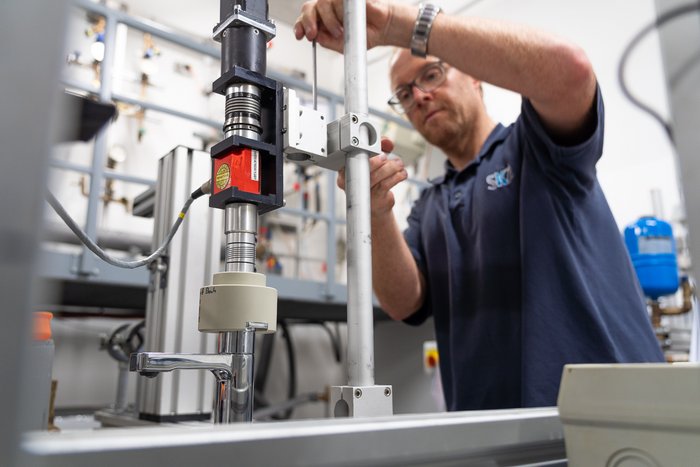
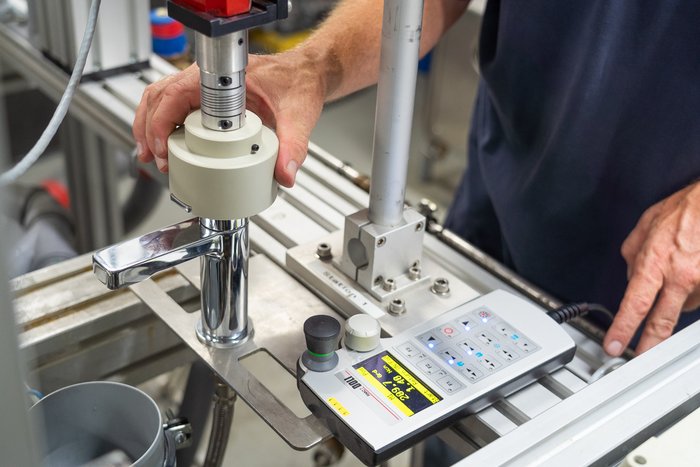
- Bending moment tests
- Leak and endurance tests
- Corrosion tests in artificial atmospheres; salt spray testing
- Assessment of cases of damage
Standards, guidelines and tests
For sanitary tapware
DIN EN 200, DIN EN 246, DIN EN 816, DIN EN 817,
DIN EN 1111, DIN EN 1112, DIN EN 1113, DIN EN 15091
Impact tests
DIN EN 15091
Standards committees in which we are represented
- NA 003-02-01 AA "sanitary tapware"
- NA 003-02-02 AA "sanitary tapware for drinking water installations in buildings"
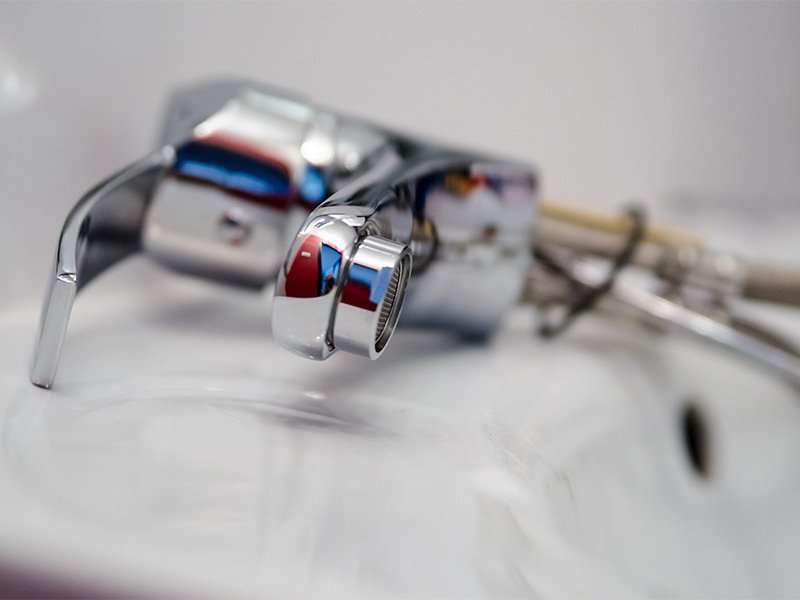
Testing of sanitary tapware
Testing of sanitary tapware is crucial to ensure that they are suitable for their intended application and possess the necessary mechanical, thermal, optical, and chemical properties. This serves to ensure quality, functionality, product safety, and compliance with legal requirements.