
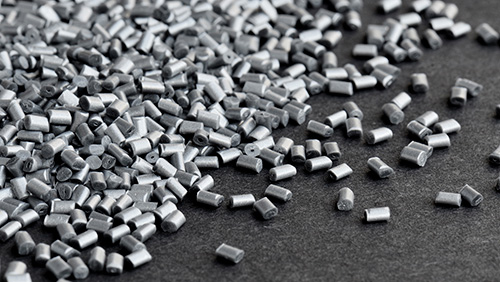

Elastomers are used where their flexibility and chemical resistance offer significant advantages. The largest area of application for this class of materials is in tires. Elastomers are also popular for use in seals. The properties of these materials can be precisely adjusted using a wide variety of formulations. Their good temperature resistance also ensures a wide range of applications, especially for silicone rubbers. These silicone elastomers are also a popular material for use in medical technology.
The wide range of applications for elastomers is achieved through the great variety and modification possibilities of the rubber types. At SKZ, elastomer formulations are developed and customized to meet the requirements of a wide range of applications.
At SKZ, we draw on our extensive experience in the field of elastomers, particularly in the following areas:
We offer market and literature research to identify suitable elastomer systems, taking your specific requirements into account.
We specialize in incorporating fillers and additives using various mixing and dispersing units as well as compounding systems. In addition, we can produce small batches for our customers on a contract basis.
Our focus is on characterizing the entire process chain—from reactive elastomer systems to vulcanized elastomer components. This includes: reactivity and curing behavior (DSC, DEA, rheometer), processability (rheometer), composition (GPC, FT-IR, and SEM-EDX), dispersion quality (particle measurement technology), mechanical properties (tensile testing, hardness, fatigue), thermal properties (DSC, DMA, TGA), and aging behavior. Everything related to the elastomer material group
Are you looking for thermal or adhesive joining techniques to bond your materials with high quality? Do you want to pre-treat or analyze the surface of your plastic components? SKZ supports you in selecting mechanical or physical surface pre-treatment and joining processes according to technical and economic criteria, even at your premises.
To the areas of welding | bonding | surface technology
In the field of component manufacturing, we can draw on a variety of pressing and injection molding processes.
The production of a wide variety of standard test specimens and special test specimens using cutting or injection molding processes is part of our numerous customer and R&D activities.
Just as diverse as the possible applications of elastomers are the various non-destructive testing methods, including those based on ultrasound, X-ray, terahertz and radar technology, and thermography. These can be used to detect defects such as pores and cavities in components or during manufacture in the liquid state. Similarly, the curing reaction can be monitored inline on the curing component in order to reduce cycle times and increase process reliability.
We produce test specimens on our injection molding machines for the subsequent investigation of the properties of new elastomer materials. We produce corresponding (bonded seam) tensile bars, flow spirals, or universal mold plates according to your specifications and in accordance with current testing standards. We are also happy to carry out the corresponding tests on the test specimens to characterize the material properties. In addition, we also offer simulations regarding rheology and other component properties.
At SKZ, we have several continuous compounders available for compounding elastomers. Smaller mixtures, especially those containing solid rubber, can be processed using a laboratory kneader (“MetaStation”). This can also be used for processability testing. A vacuum mixer and a centrifugal mixer are also available for LSR formulation.
The following processes are available for processing into hardened molded parts: injection molding, hot pressing.
Im Rahmen eines Studiums können die erforderlichen Studien- oder Abschlussarbeiten beim SKZ absolviert werden.