

How are plastic surfaces affected by disinfectant irradiation?
UV-C disinfection protects against germs—but how resistant are plastics and other materials to this radiation? The SKZ Plastics Center is developing practical test cycles that provide companies with reliable data on material resistance. The goal: to combine safety and quality. Interested companies can participate free of charge and work together to create new standards for hygiene and durability.
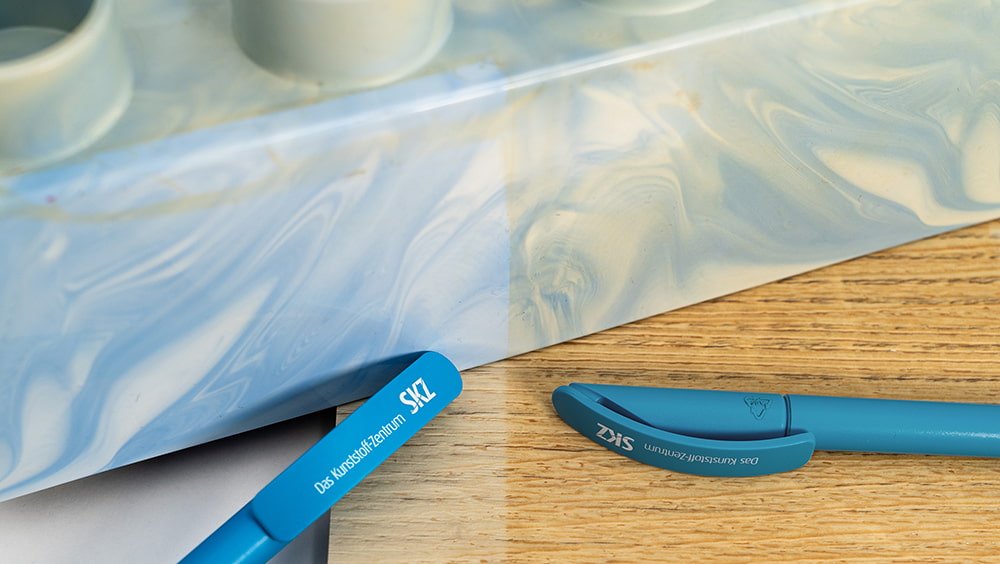
Example of the aging of plastics due to UV-C radiation: The right side was exposed to radiation, the left side was not. (Photo: Julian Hesselbach, SKZ)
SKZ plans research project to develop practical tests for the aging of plastics under UV-C radiation
The disinfection of surfaces using UV-C radiation is gaining importance worldwide—especially in areas with high public traffic or intensive hand contact, such as aircraft cabins, rental vehicles, or electronic devices. Disinfection with UV-C radiation offers many advantages, such as high speed, cost efficiency, effectiveness, a wide range of applications, and chemical-free disinfection.
But there is a downside: UV-C radiation can damage plastics if they are not modified or are insufficiently modified, significantly shortening their service life. To date, there are no standardized test cycles that take actual operating conditions into account and realistically simulate accelerated aging.
SKZ is taking on this challenge and would like to launch the research project “Development of application-specific UVC disinfection tests for plastic products (UVC test)”. The aim is to develop a practical test cycle that takes into account the interaction of irradiation intensity, dose, and dark phases. This will provide companies with reliable data on the resistance of their products to UV-C radiation in the future.
Current standards such as BIFMA HCF 81-201X or ASTM G224-23 only provide rough guidelines for UV-C irradiation tests. These specifications are not sufficient for manufacturers and users who want to evaluate the durability of their products under real conditions. SKZ wants to close this gap and set new standards.
“UV-C disinfection is an important component of hygiene and safety – but it must not come at the expense of material quality. With our project, we are laying the foundation for reliable testing methods that take the intended use into account and help companies to make their products future-proof,” says Julian Hesselbach, Senior Scientist for Adhesives and Surface Technology at SKZ.
SKZ invites companies from the plastics, electronics, automotive, and aviation industries to participate in the project free of charge and actively. Together, practical solutions can be developed that meet the increasing requirements for hygiene and material resistance.
Further information on adhesive bonding and surface technology