
A major boost for plastics processors
High setup and cleaning costs are particularly common when processing thermoplastic elastomers, silicone elastomers, and optical plastic surfaces. These costs lead to longer downtime, tie up capacity, and increase scrap. With the launch of the IGF project “PermaTrenn,” the SKZ Plastics Center and Fraunhofer IFAM are developing and validating standardized testing and evaluation methods to reliably predict the behavior of permanent release layer systems in the future.
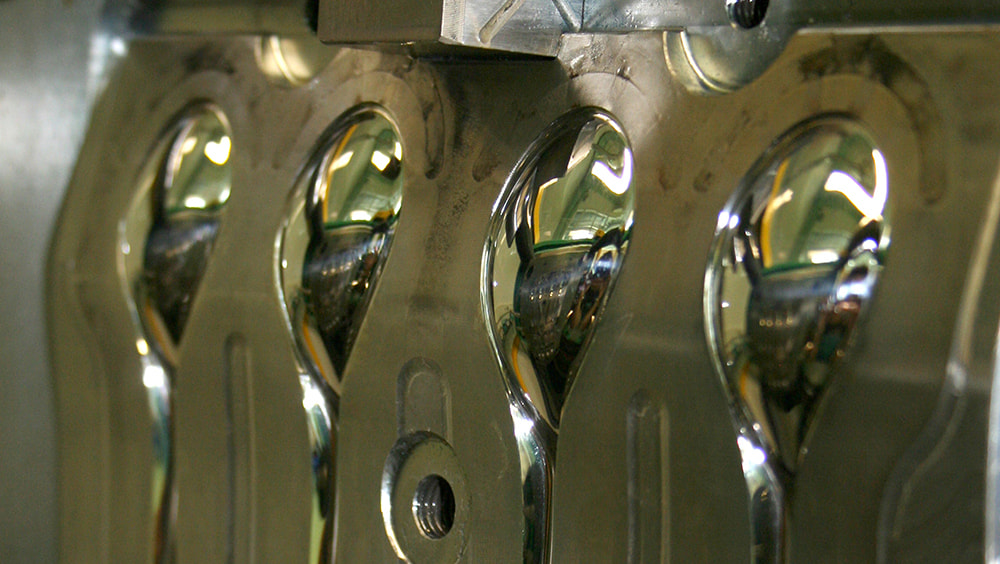
How can the behavior of permanent release layer systems in the injection molding process be reliably predicted in the future? The SKZ and Fraunhofer IFAM are investigating this in their joint project “PermaTrenn.” (Photo: René Bauer, SKZ)
New IGF Project “PermaTrenn” Aims to Stabilize Injection Molding Processes
The project focuses on developing testing methods to quantify adhesive demolding forces under real-world process conditions. With the help of finite element analyses and cohesive zone models, these forces are to be made predictable in the future. In addition, novel coatings with specifically adjusted polar and dispersive surface energies are being investigated. Their influence on film formation, wetting, and mold filling is being evaluated in systematic laboratory and production trials.
The combination of high-temperature contact angle measurement, surface analysis, and in-process sensor technology lays the foundation for a deeper understanding of the interfacial processes between the melt and the mold. The insights gained will be incorporated into robust selection criteria that will help processors use coating systems more effectively and with greater process reliability in the future.
The project also includes the transfer to thermoplastics as well as validation in an industrial setting through practical trials conducted by the project-accompanying committee. In this way, “PermaTrenn” addresses key performance indicators for processors: longer mold life, more stable demolding, extended cleaning intervals, and the ability to produce faster and more energy-efficiently.
“With ‘PermaTrenn,’ we are creating, for the first time, a robust basis for decision-making regarding the use of permanent release layers in injection molding. This reduces downtime, lowers scrap rates, and enables significantly more efficient production,” explains Anika Fuhrmann, Senior Engineer for Injection Molding Research at SKZ.
Companies in the plastics processing, toolmaking, or coating technology sectors are invited to participate in the project committee free of charge. They will receive early access to interim results and can actively influence the project’s industrial focus.
The research project is being conducted jointly by SKZ in Würzburg and Fraunhofer IFAM in Bremen and has been running for 24 months since February 1, 2026.
Further information on the SKZ Injection Molding Research Group
The “PermaTrenn” project, grant number 01IF24708N, is funded by the Federal Ministry for Economic Affairs and Energy (BMWE) from February 1, 2026, to January 31, 2028.