
A First in Horb: SKZ Offers Injection Molding Training in Turkish for the First Time
The SKZ Plastics Center is expanding its continuing education offerings at its Horb am Neckar location to include the course “Certified Injection Molding Set-Up Technician – Part 1,” which will be taught entirely in Turkish for the first time. With this initiative, the SKZ aims to specifically reach Turkish-speaking professionals in the plastics industry and open up new avenues for companies to train their employees.
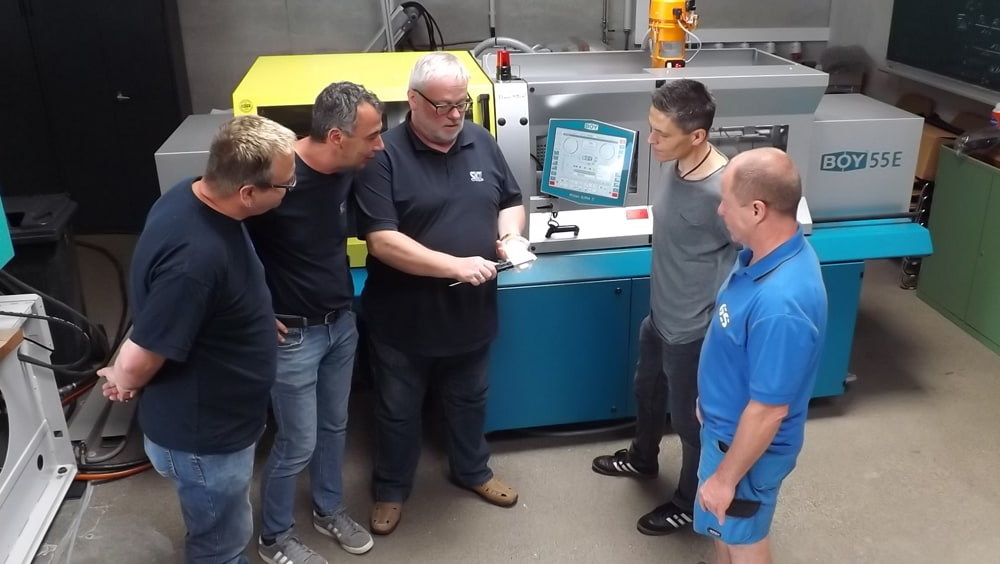
The first part of the Certified Injection Molding Set-up Technician training course will be held in Turkish for the first time at the SKZ training center in Horb am Neckar from October 26–30, 2026. (Source: SKZ)
Continuing Education in the Native Language as a Means of Securing a Skilled Workforce
The plastics processing industry faces the challenge of attracting qualified professionals and continuously developing its existing workforce. At the same time, many companies employ experienced production workers with a Turkish language background who already possess extensive practical knowledge but often make only limited use of traditional continuing education programs.
By offering the “Certified Injection Molding Set-Up Technician – Part 1” course in Turkish for the first time from October 26 to 30, 2026, the SKZ is addressing this need and providing an important target group with access to a recognized qualification.
“Many companies have employees with extensive practical know-how who take on daily responsibilities in production. With this Turkish-language course, we want to give these skilled workers the opportunity to deepen their knowledge in a targeted manner and further expand their competencies. This benefits both the participants themselves and the companies,” explains Jürgen Kern, site manager of the SKZ in Horb am Neckar.
Expertise for Stable and Cost-Effective Injection Molding Processes
The Certified Set-Up Technician qualification provides comprehensive knowledge of injection molding production. Participants learn the technical fundamentals required for the safe setup and startup of injection molding tools. In addition, the course covers both theoretical and practical knowledge of materials, molds, machines, and the most important process-related aspects of the injection molding process.
Course content includes, among other things, plastics science, mold technology, the fundamentals of injection molding technology, material preparation and drying, as well as topics such as filling studies, seal point determination, metering, mold internal pressure, shrinkage, and process optimization. The goal of this training is to equip participants with the necessary knowledge to master injection molding processes safely, reproducibly, and cost-effectively.
Practical, hands-on learning directly relevant to everyday operations
A particular emphasis is placed on practical application. Participants practice setting up and adjusting the injection unit, starting up various injection molds, and determining suitable process parameters on different machines and molds. The correct adjustment of mold clamping is also part of the training content.
Participants can bring problem parts from their own production facilities and analyze them together with the instructor. This allows specific issues from day-to-day production to be directly integrated into the training program, and potential solutions to be discussed right in the course.
SKZ Horb – An Attractive Training Location for the Plastics Industry
Thanks to its convenient location along the A 81 and its proximity to Switzerland and neighboring countries, the SKZ training center in Horb am Neckar is easily accessible to participants from a large catchment area.
The training offerings at this location range from materials science and plastics science to basic training in injection molding, as well as advanced certifications such as Certified Set-Up Technician or Certified Sampler, and various courses on plastic welding.
The first-ever Turkish-language course, scheduled for October 26–30, 2026, underscores the SKZ’s approach to designing continuing education programs that are practical and tailored to specific target groups, thereby contributing to the development of skilled workers in the plastics industry.